

Some members of the Westerly Town Council are questioning whether the town misspent taxpayer money on legal research into a closely-watched public access matter involving the Watch Hill Lighthouse that wasn’t submitted before a critical deadline and still hasn’t been released to the public. The matter is expected to come up at a special town council meeting Sept. 16.
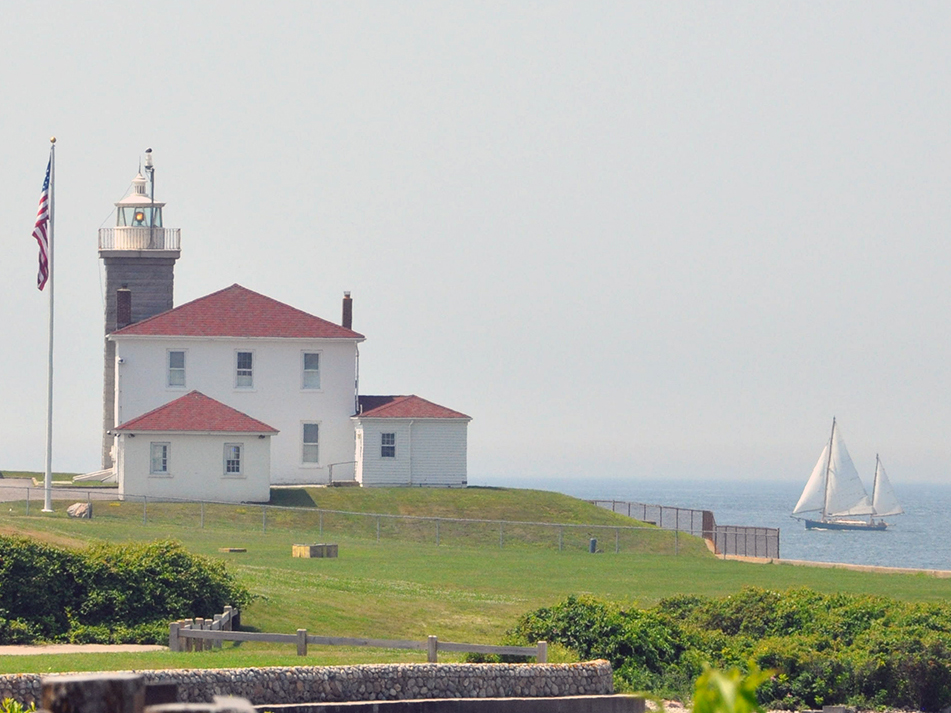
Recent calls for an explanation from the town solicitor’s law firm relate back to a controversy that started more than a year ago when the federal government announced it planned to transfer the Watch Hill Lighthouse to a private non-profit.
That news sparked pushback from fishermen and shoreline access advocates who worried the ownership change could jeopardize the public’s ability to use the lighthouse property, given what they consider the increasing efforts of property owners to privatize the Watch Hill area.
At the time, the town council instructed Town Solicitor William Conley to research the status of the access road leading to the lighthouse land. Property owners in the area maintain Lighthouse Road is private, but access advocates argued the town hadn’t adequately examined whether a public right-of-way exists there.
Conley made contact with the federal agency executing the deed, the deadline for transferring the property was delayed, and Conley’s office promised the town council and U.S. government it would send a report and legal analysis to federal lawyers in charge of finalizing the transfer.
But while the town paid nearly $50,000 for the legal work, documents newly released by the U.S. General Services Administration, or GSA, and Westerly show the research documents and written report were never actually submitted to the federal government. The failure has caused two councilors to question Conley’s handling of several pricey shoreline access legal fights, and his arrangement as solicitor for the town.
“How do you trust anything else being done?” Westerly Town Council member Mary Scialabba said in an interview. “If this was deliberate, then you’ve got to question everything that he’s working on. You just have to. If you don’t, then you’re the fool.”
Blown deadlines and ‘worthless’ legal work
Town officials began asking questions about Conley’s work on Lighthouse Road in March, when Westerly’s Harbor Management Commission requested copies of all documents sent to the GSA and town council on the issue. The commission is responsible for advising the town council on coastal matters.
Conley responded that the information couldn’t be shared with other town officials because it would waive the town council’s attorney-client privilege and attorney work product protections.
When The Public’s Radio sent a public records request to the town seeking communications between Conley’s office and the GSA, Westerly also refused to release the information. But a parallel federal records request revealed Conley never provided the promised documents to the GSA.
Instead, communications between Conley’s office and the federal government show growing frustration at the GSA over the solicitor’s failure to produce the research that was promised.
“I was under the impression we would be getting information back from you regarding the status of Lighthouse Road,” GSA attorney Carol Chirico said to Conley’s associate Diony Garcia in a November email. “I thought your work analyzing the status of the road itself was close to completion.”
Chirico added, “To put a closing off 4+ months from the date we receive the recommendation from the Secretary of Interior is highly unusual, and we were hoping to have your research available prior to closing.”
Garcia replied, “Understood” and said he and his colleagues “hope to double back as soon as possible.”
While the solicitor’s office failed to provide the documents to the GSA, the email communications indicate a last minute conference call was held between Conley’s office and federal officials a few days before the deed was signed over.
Conley then presented his written findings to the town council in a January executive session, just days after the lighthouse property was already closed on without access stipulations over Lighthouse Road included in the transfer documents.
“The research was done, but it was worthless because it never was submitted,” Westerly Town Council member Joy Cordio said. Cordio wouldn’t discuss the details of Conley’s findings because they are still confidential but said the report “could have made a difference” if it was sent to the federal government in time.
Conley did not respond to a request for comment for this story.
Billings from an outside law firm hired to conduct Lighthouse Road research show the town was charged $28,000 for the firm’s work. Solicitor Conley doesn’t make the details of his invoices available for public inspection, but Cordio says her conservative estimate is Conley’s firm charged the town an additional $20,000 for Lighthouse Road legal work.
“That’s taxpayer money,” Cordio said. “I do believe that this was a serious break in trust.”
Like Scialabba, Cordio raised the question of whether Conley deliberately failed to submit the material to the federal government, an outcome some shoreline access advocates thought was possible even before the property was transferred. Cordio said she is skeptical, in part, because of Westerly’s track record of bending under pressure from shoreline fire districts that control large swaths of beachfront property.
“There has been historically, factually, a lot of accommodations for the fire districts in Westerly: ordinance changes that benefit only them, loss of rights-of-ways [to the shore], privatization of rights-of-ways,” Cordio said. “Different things like that happened legally through an attorney being involved … You just have to wonder: who’s in control here?”
Town’s handling of records request raises other questions
Cordio and Scialabba also said they are concerned about the town’s handling of the records request submitted by The Public’s Radio under the Rhode Island Access to Public Records Act, or APRA.
The town originally refused to release the documents on the grounds that they were shielded by the attorney-client privilege. After the federal government released the documents under the U.S. Freedom of Information Act, or FOIA, the town backed away from the privilege claim, said it would release “certain records,” but then raised new inapplicable grounds to say documents could still be withheld.
But following an appeal submitted by The Public’s Radio to the Rhode Island Attorney General’s Office, Solicitor Conley admitted in a sworn affidavit the information initially withheld was never privileged, the “certain records” released were actually all of the documents, and he never sent copies of the research or a written report to the federal government. Denying the records request on inapplicable grounds was a mistake, Conley said.
John Marion, executive director of the good government group Common Cause Rhode Island, called the town’s treatment of the records request “puzzling.”
“It feels like the denial of the APRA request may have been an effort to hide the fact that the analysis was never done,” Marion said.
Marion said Conley, a former state senator, longtime municipal solicitor and former legal counsel to the Rhode Island Ethics Commission, “advertises his expertise in things like compliance with the public records law.”
“So it’s hard to believe that it was a lack of familiarity with the law,” Marion said. “It’s hard to believe such an experienced attorney would make such simple mistakes.”
The solicitor’s response to the APRA request from The Public’s Radio cost Westerly $4,700, according to a source in town government.
The Attorney General’s Open Government Unit has not yet said whether it will pursue fines against Westerly for improperly handling the records request.
Town councilors at odds over Conley’s work
At a Sept. 9 town council meeting, Councilor Kevin Lowther requested that the Lighthouse Road matter be placed on a future agenda for council members to hear from Conley in executive session about the handling of the public records request and details about his office’s communications with the federal government.
The matter has been placed on the agenda for a special meeting Monday night as a possible executive session discussion on the public records request. The meeting was called for the solicitor to give updates on a long list of legal cases involving the town, including shoreline access litigation with the Watch Hill and Weekapaug fire districts.
“I am left with some questions, and I think those are questions that we would like to ask the solicitor’s office as a council,” Lowther said in an interview with The Public’s Radio. “Once we get [answers], then we can communicate that to the public.”
Councilor Robert Lombardo, who commonly sides with Watch Hill property owners and recently said shoreline access advocates “deserve to be belittled,” opposed holding the executive session, saying he didn’t want to “sit there for three hours listening to nothing.”
“I don’t believe that this town council should have a lot of oversight over what an attorney does for the town of Westerly on lawsuits,” Lombardo, a lawyer, said at the Sept. 9 meeting. “Because councilors have no basic understanding in the law, they’re gonna always be confused.”
Several councilors now say they’d like the town council to consider releasing the findings of the Lighthouse Road research. Councilor Phil Overton said he’s interested in sharing the information as a matter of transparency.
But Overton – who once said in a meeting “Attorney Conley, I think you’re awesome” – wants to speak with the solicitor first.
“We need to be conscious of potential litigation, so that’s why I always defer on these issues to the solicitor,” Overton said in an interview. “He’s an expert. I have great confidence in him to give the council good advice.”
Scialabba has a different take on Conley’s work. She said the solicitor’s failure to submit documents to the federal government has caused her to doubt the council’s decision earlier this year to renew Conley’s contract for another two years and with a 50% raise.
“It makes me question – did we do the right thing by rehiring him?” Scialabba said.