
For years, Marty Sinnott warned Rhode Island lawmakers of trouble mounting in the state’s child welfare system. But the CEO of the Middletown-based nonprofit Child and Family Services of Newport County says nobody listened. Now, officials from the state Department of Children, Youth and Families are scrambling to remove kids from the troubled St. Mary’s Home for Children. And federal investigators say the state has warehoused hundreds of children with behavioral health needs at Bradley Hospital, in violation of their civil rights. To understand how it came to this, Health Reporter Lynn Arditi talked with Sinnott.
This transcript has been edited for clarity and length.
LYNN ARDITI: How did the state wind up with so many children at Bradley Hospital?
MARTY SINNOTT: You know since the start of the pandemic, providers, advocates have been sounding this alarm of too many kids boarding in emergency rooms. At one point, I think the count was over 25 kids [who] were in emergency rooms, waiting for a bed at Butler or Bradley [Hospitals].
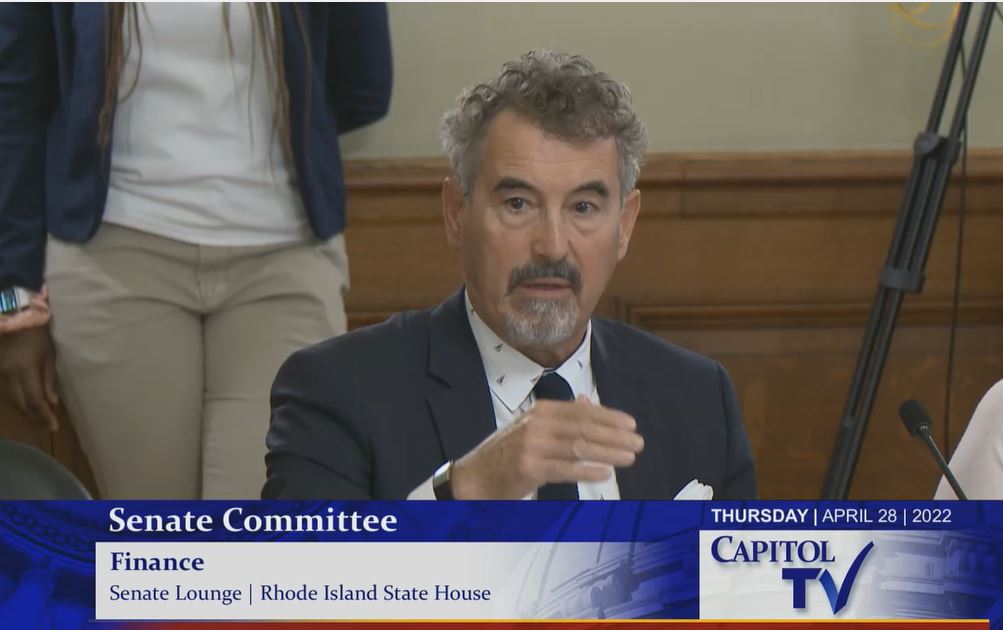
ARDITI: Here’s how you described the situation back in April of 2022 when you testified about the problem before the Senate Finance Committee:
“There are more kids in psychiatric care now than ever before, there are more kids waiting to get into psychiatric care than ever before, there are more kids in psychiatric care that should be someplace else.’’
One of the things that the U.S. Attorney Brian R. Cunha said in his May 13 letter to Gov. Dan McKee and state DCYF Director Ashley Deckert is that this problem did not start with the pandemic, it started before. Why was that?
SINNOTT: Some of the groundwork was laid before the pandemic, when the state of Rhode Island very intentionally underfunded residential treatment. And due to a really intentional move on the part of previous administrations to reduce spending, community providers like Child and Family, we didn’t have the capacity to respond to that need.
ARDITI: What’s available in Rhode Island for children, once they get out of an acute crisis that puts them in a place like Bradley Hospital?
SINNOTT: Some of the best work that we’re doing and other organizations are doing are in evidence-based, in-home programs with families. So that basically family therapy or other types of supports can be provided for that youth to be home with their family. However, often kids need more defined supportive step-down options, which could mean residential treatment.It’s not as normal as being at home, but it’s a heck of a lot more normal than being in a locked psychiatric setting.
ARDITI: But as you know, residential treatment programs in Rhode Island have run into trouble too. Earlier this year, the state child advocate found abuse and neglect at Saint Mary’s Home for Children. Is what happened at St. Mary’s an anomaly? Or could this story have been told about other residential programs here?
SINNOTT: You know, Saint Mary’s made some bad management decisions, and that’s on them. But the systemic issues are the same ones that Child and Family and other organizations have really had to contend with. One of the systemic issues is inadequate rates, a history of inadequate rates from DCYF. Because of low rates, not enough supports programmatically — that absolutely results in higher staff turnover and burnout, which results in less continuity of relationships between staff and youth. That results in increased issues around behavior. And it becomes a cycle.
ARDITI: So what kind of services can the state offer for kids coming out of the hospital before they enter the community?
SINNOTT: Foster Care is a big part of that. We did not treat foster parents as essential workers under this pandemic. And that was a huge mistake. Rhode Island has lost about half of its foster care capacity. So these are foster parents who’ve basically said, ‘Hey I’m tagging out.’ And we’re going to be digging our way out of that hole for many years to come.
ARDITI: What’s it going to take to get us out of it? And is it money? Or is it more than money?
SINNOTT: I think it does include money. But it’s a lot more than money. This is not a one-time quick fix. We are so overdue for an evaluation of what the capacity needs are of our child welfare system. And I think to have that homework done by an outside third party objective organization is absolutely key.
Legislation (S-2705 Sub A and H-7823) introduced in the General Assembly would require the DCYF to conduct period needs assessments.
