
These areas called “asthma hot spots” are typically lower-income and communities of color. These neighborhoods also have less access to green space like parks and are often heavily trafficked.
“Stop-and-go traffic on a regular diesel bus is where you get more of the emissions and so it’s just a win-win all the way around to be able to have the zero emission buses really benefiting the communities that have been really impacted by air pollution,” Julian Drix, asthma program manager at the Rhode Island Department of Health, said.
The state health department used data on children enrolled in Medicaid to map out the “asthma hot spots.”
RIPTA officials wanted to prioritize these neighborhoods since funding for the new buses came from a federal Volkswagen settlement over diesel-engine air pollution.
“It’s a great use of taking settlement funds that our government was able to get from a company that had done harm to air quality and, therefore, harm to people with respiratory issues and use those funds to directly benefit those people who were harmed by that,” Drix said.
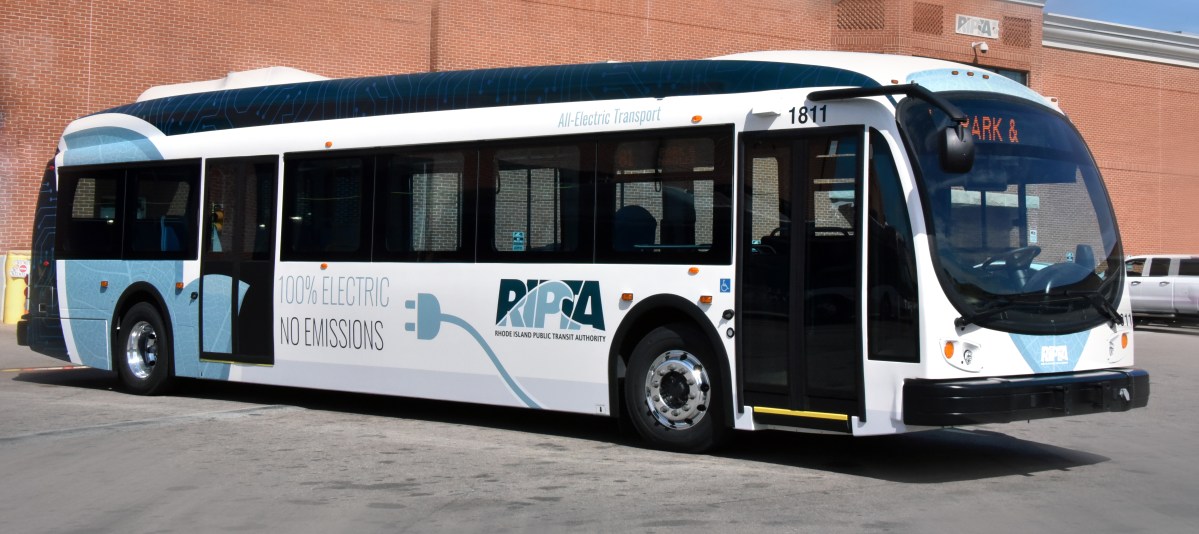
The new all-electric buses are set to be tested on routes through South Providence and the West End of Providence.
After testing is done, the state plans to buy about 20 more zero-emission buses in 2021 to replace retiring diesel ones.
More than $10 million of settlement payments are expected to go toward purchasing all-electric buses.
Carbon emissions are reduced by nearly 230,000 pounds a year each time a diesel vehicle is replaced by a zero-emission bus, according to RIPTA.
The state also plans to use more than $1.4 million of settlement payments to install charging stations for electric cars in 2020.