

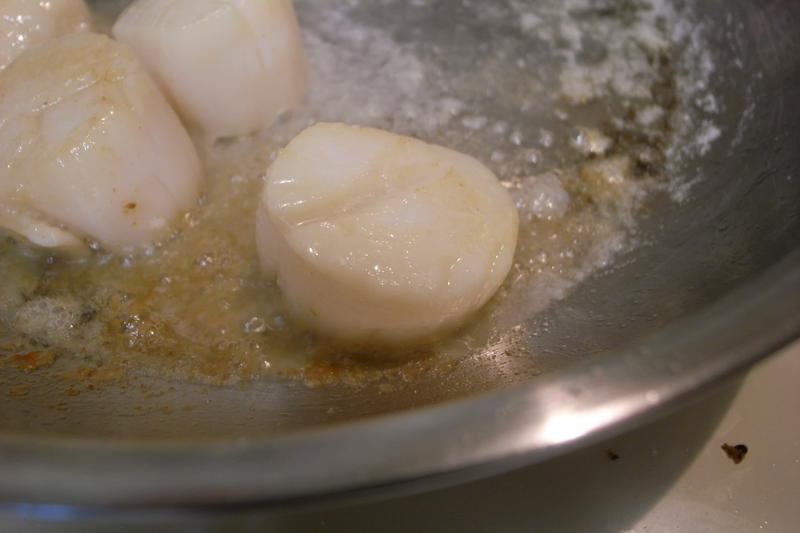
In 2016, commercial fishermen landed more than $300 million worth of fish at the Port of New Bedford, and 85 percent of that value came from scallops.
A new study from Woods Hole Oceanographic Institution shows as carbon emissions in the atmosphere increase, so does the acidity in the ocean.
Jennie Rheuban, lead author of the report, said that could affect how well scallops can grow.
“Adults may actually be growing slower and calcifying less quickly under these acidified conditions because it’s more difficult for them to lay down calcium carbonate as a shell,” Rheuban said.
Rheuban said ocean acidification could also cause scallops to become more vulnerable.
“They aren’t able to swim quite as well when they’re experiencing acidified conditions, and so we hypothesize that under acidification, scallops may be more susceptible to predation,” she said.
Rheuban said reducing carbon emissions and continued management of the fishery could prevent the scallop population from declining so drastically.
The results of this study are estimates based on how ocean acifidication could impact related shellfish species since scallop-specific reports have never been published, Rheuban said.